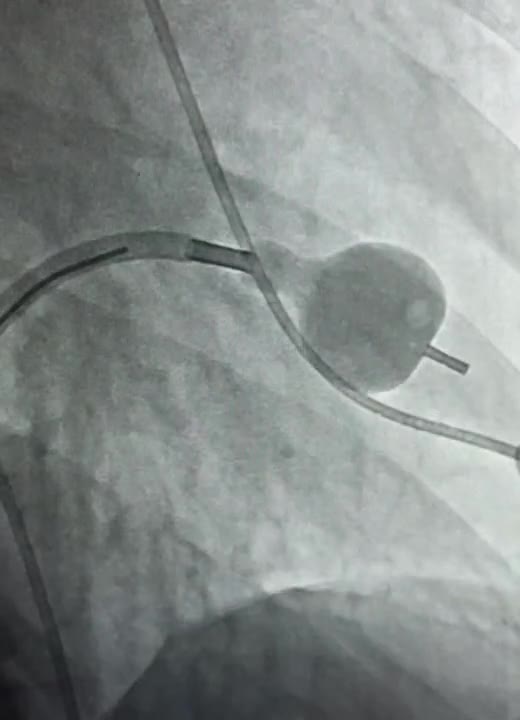
What are BMV and PTMC?
Balloon mitral valvotomy (BMV), also called percutaneous transvenous mitral commissurotomy (PTMC), is a catheter-based procedure used to widen a narrowed mitral valve. The valve lies between the left atrium and the left ventricle.
Mitral stenosis can restrict blood flow through the heart and cause breathlessness. Rheumatic valve disease is an important cause. The aim of balloon treatment is to improve the valve opening in a suitable patient.
How is suitability assessed?
Echocardiography helps assess the valve, its narrowing and any leakage. A transoesophageal echo may be needed for more detailed assessment, including checking for a clot. The valve’s characteristics and wider health determine whether balloon treatment or another option is appropriate.
What happens during the procedure?
A catheter is usually introduced through a vein in the groin and guided to the heart. The operator crosses to the left atrium and positions a balloon across the narrowed valve. Controlled inflation helps separate the fused valve edges.
Imaging guides the procedure and checks the result. Anaesthesia and monitoring vary with the patient, procedure plan and hospital practice.
Benefits, risks and follow-up
Improving the valve opening may reduce symptoms in a suitable case. Risks include bleeding, clot-related complications or stroke, leakage through the valve and other cardiac complications. Some situations require surgery instead.
Afterwards, the team monitors recovery and provides an individual prescription and follow-up plan. Repeat echocardiography can assess valve function. The length of benefit and recovery time vary.
Frequently asked questions
Is balloon mitral valvotomy open-heart surgery?
No. It is performed using catheters. Surgery remains an alternative or necessary treatment for some valve conditions.
Can every narrowed mitral valve be treated with a balloon?
No. The valve structure, leakage, clot assessment and overall clinical picture determine suitability.
Will I still need follow-up after a successful procedure?
Yes. Follow-up checks valve function, symptoms and prescribed treatment. Your team will advise the timing of repeat assessment.